Matthew Opalka · The Mask & the Town
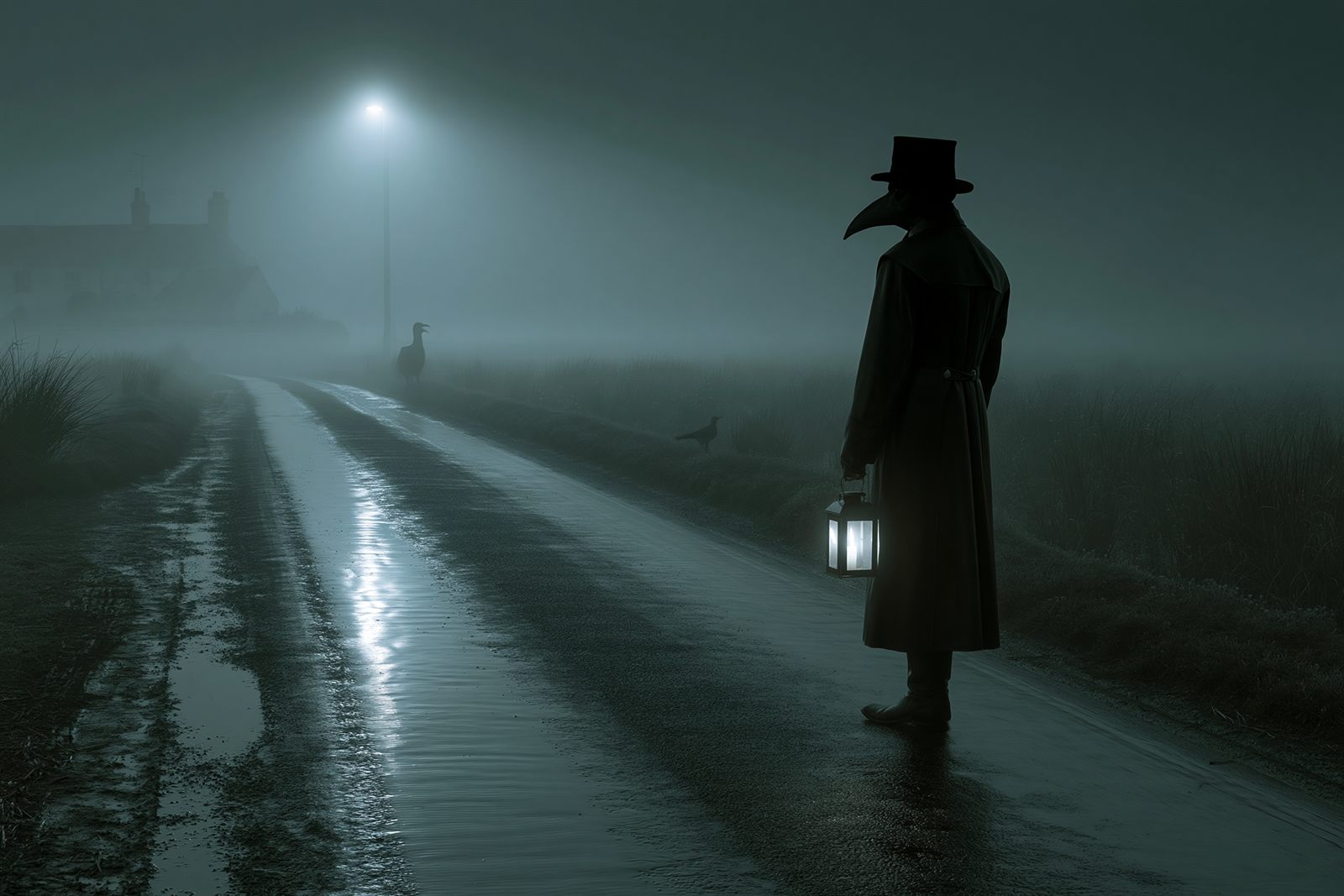
The Mask & the Town
What you should know before you walk the lanes of Harrowmere.
The Doctor
Matthew Opalka arrives in the worst weeks of a plague, in the coat and the beak, with a bag of vinegar and bruised herbs. He says he can keep the sickness out. He moves untouched through dying streets, year over year, the way a fox moves through a henhouse it has learned no one guards. He prefers the houses where the fathers are already gone — and he is always thanked.
The Mask
Physicians of the age stuffed the long beak with herbs, believing it strained the bad air. Opalka is never afraid of the air. His mask does something else: it lets a house look up and see only the doctor — calm, reasonable, beaked — and never the face of the thing that moved in. Look for his eyes and you find only your own, doubled and curved in smoked glass.
Harrowmere
A small town that learns a new arithmetic when the sickness comes: which doors carry the white chalk cross, and which do not. The fathers go first. What is left behind are the women and the children and a great unspoken question of who will manage — a town glad enough of a good doctor that it stops asking what kind of man he is.
The Physic
A nightly tea against the miasma. What it truly does is lay a fog over a house — it takes the questions a mother used to ask, smooths the surface so nothing shows, keeps a household too soft to wonder and too quiet to run for help. A quiet house, the doctor says, is a healthy house. He never drinks it himself.
A note on this story
This is fiction, and it is also a way of telling something true. The plague, the mask, and the town are a lantern held up to a real kind of harm — the kind that wears a reasonable face and is thanked in the lane. Names and places here are invented. It is written in shadow on purpose: the dread is meant to be felt, never the detail.
If you recognise more of it than you wanted to — you are not alone, and you did not imagine it.